Land Choices: Changing Development in America
Choices for Landowners
Preserve Your Land Conservation Subdivisions Other Land Choices
Home
About LandChoices
LandChoices' Sponsors
Land Choices in the News
LandChoices' Projects
Contribute to LandChoices
Contact Land Choices
Sites About Preserving Your Land
Activities for Children
 
Learn More
Frequently Asked Questions


Tell A Friend About Our Site
  
You can help take conservation subdivisions mainstream


To read portable document files (PDF), you need Adobe Acrobat Reader. Click below to download the free software, install it, then return here to view the information. 


Copyright 2007
LandChoices -
All Rights Reserved

 
Advantages of Conservation Subdivision for Developers and Home Builders
Let's be realistic. Developers and home builders won't build houses unless they find it a profitable venture. Further, time is money for them. They want to buy the land and build the houses as quickly as they can because, until the houses are built, their money is flying out the door.

Conventional development is the result of streamlining the design/build process. It seems easier/more economical to pull the permits, divide up the land in equal chunks and bulldoze it to remove all of the obstacles so they can place the houses in uniform rows. The fly in the ointment is that the assumptions are dead wrong.

By involving a conservation subdivision designer, development costs can be reduced, natural features can be saved, planning boards delighted, and future homeowners will be willing to pay more for their residence. Don't believe it? Keep scrolling!

So why isn't it done?
For starters, conservation subdivision isn't well known. But that's just the first hurdle. The highest one is the local ordinances that encourage, if not demand, builders to build this way. The same ordinances cause us to have strip malls next to strip malls.

Altering ordinances is like watching grass grow. No, wait. It might be more appropriate to say that in the time it takes for local planners to alter their building ordinances, vast swaths of land are permanently lost to development.

LandChoices plans to assist developers and builders by having local planning commissions adopt "LandChoices Approved Conservation Subdivision Ordinance" that permits developers and builders to *retain the natural features which we all want to save.

Note: There is no tax-deduction for a developer when he places a conservation easement on property in a conservation subdivison.


Photo of Ponds At Woodward above courtesy Randall Arendt

Big Builder magazine on conservation subdivisions
"Leaving land in its natural state or building trails through it is cheaper than building infrastructure or golf courses." Big Builder magazine (May 1, 2006) Read the article (PDF)

Same Number of Homesites
Conservation subdivisions allow the same maximum number of homesites as conventional subdivision development. 

Not Clustering
Conservation subdivision design vs. "Clustering" 

Advantages of Conservation Subdivision Design

Site plan review is smoother when development plans conform with local planning objectives.

• Development costs are reduced as utility lines, streets, driveways and sidewalks are shorter.

• Conservation subdivisions have marketing and sales advantages, as buyers prefer lots close to or facing protected open space.

• Homes in conservation subdivisions tend to appreciate faster than counterparts in conventional developments.

• Where zoning permits, a variety of housing types, ranging from single family detached to attached units, may be more easily accommodated.

More Profitable
Conservation subdivisions reduce costs and are often more profitable and faster selling compared to conventional subdivision design. One researcher recently studied 184 lots in conservation subdivisions and in conventional subdivisions in South Kingstown, RI, and reported the followingresults:

  • Developers’ costs were 28% lower ($7400 less, per lot), compared with conventional subdivisions.
  • Lots in conservation subdivisions carried a 14% premium (about $15,000 more per lot).
  • Lots sold 47% more quickly compared with those in conventional subdivisions.

Learn more about the economic advantages of conservation subdivisions

First five bullet point taken from the University of Connecticut Cooperative Extension NEMO Project and The Natural Lands Trust:
All about conservation design subdivisions (PDF File)

Benefits to:
Landowners
Planners
Developers
Neighbors
Realtors
Residents

Photo by Mari Harpur

"The golf course development without the golf course"

comments LandChoices' Advisor, Randall Arendt [website], on conservation subdivisions. He is the nation's foremost authority on conservation subdivision design.


Make More Money
One of Mr. Arendt's recent designs is credited by an Indiana developer as adding at least $20,000 of value to each lot ($800,000 total) while still providing for full development density.

By respecting natural terrain and designing around existing site features on an 80-lot development in Texas, Mr. Arendt recently cut conventional site grading costs from $300,000 to $50,000 and while also retaining value by saving 23 of the 24 large oak trees that otherwise would have been destroyed in conventional development.

Faster Selling
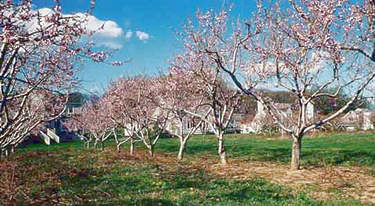
Money really does grow on trees

Many Advantages
More Advantages by Randall Arendt

Save Money, the bottom line, using conservation subdivision design.

Slideshow
Cultivating Natural and Cultural Landscapes through Conservation Subdivision Design (PDF) (Terrain.org, Spring/Summer 2006)

Video Clip: Randall Arendt discusses benefits of conservation development.


Conservation Design and New Urbanism
Learn more...
Land Choices
Search:

only search LandChoices
Preserve Your LandConservation Subdivisions | Other Choices

Home | About Us | News | Projects | Sponsors | Contribute | Contact Us | Links | Kids | Media Kit

 LandChoices • P.O. Box 181 • Milford, MI 48381 • info@landchoices.org
Privacy Statementwww.landchoices.org